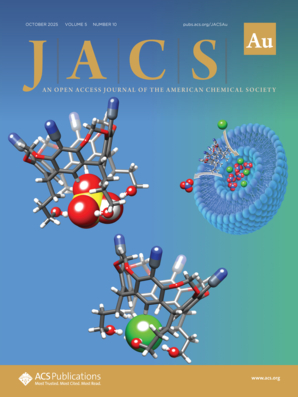
In collaboration with Professor Szumna and her team, we show that interactions often underestimated and considered negligibly weak can, in fact, have powerful consequences. Our work focuses on CH···anion hydrogen bonds—nonclassical interactions that are intrinsically weaker than conventional hydrogen bonds. By carefully designing resorcin[4]arene molecules, we demonstrate that these subtle CH-based interactions can be amplified to create highly effective anion receptors, capable of binding chloride ions very strongly and even discriminating between closely related anions.
However, the most important insight goes beyond binding. We find that the best anion “catchers” are not necessarily the best transporters across cell-like membranes. Instead, transport efficiency depends on a delicate balance between polarity and lipophilicity across the receptor surface. Substituents that most strongly polarise—and thus activate—the CH donors also increase the overall polarity of the molecule, making it more difficult for the receptor to adopt the orientation at the lipid–water interface required for efficient anion uptake and translocation. This highlights how fine-tuning weak interactions and molecular properties can reveal new design principles for functional supramolecular systems, with potential implications for sensing, materials science, and biomedical applications.